GR34 Coastal Path St Malo: Complete 2026 Walking Guide to the Sentier des Douaniers

The GR34 coastal path from St Malo — also known as the Brittany Coast Path or Sentier des Douaniers — is one of the finest day walks in France. Voted France’s favourite long-distance trail, this clifftop linear walk along the Côte d’Émeraude (Emerald Coast) passes wild headlands, hidden coves, sheltered beaches, and the extraordinary sculpted granite rocks of Rothéneuf before reaching the great panorama of Pointe du Grouin. The route is perfectly suited to beginners and experienced walkers alike: well-waymarked, no technical skills required, and with bus connections at every key waypoint for a self-guided one-way walk. For anyone arriving on the Portsmouth–St Malo ferry, it is the ultimate car-free walking holiday — some of the most dramatic sections of the Brittany Coast Path are within a single day’s reach of the port gates.

Last updated: March 2026 | All information verified

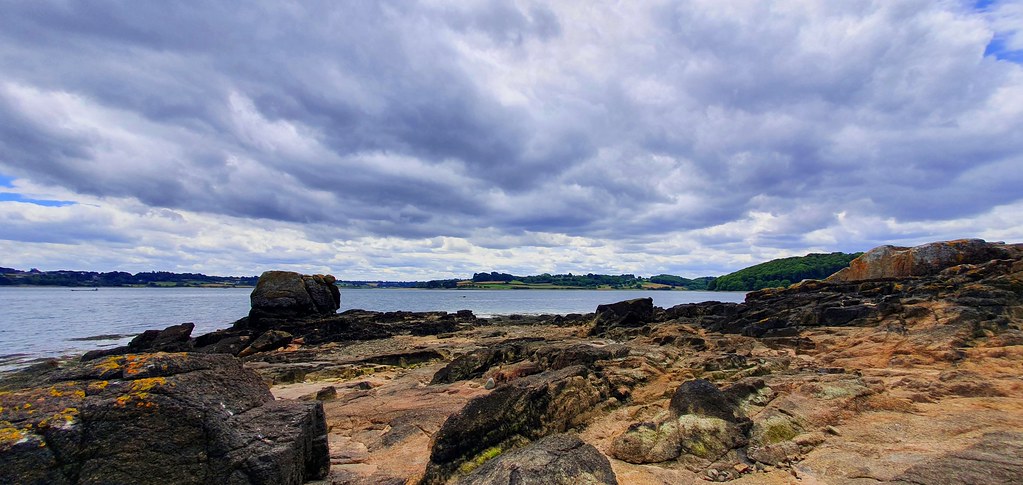
GR34 Coastal Path from St Malo Photo taken from the rocks looking over the water

Ready to Walk the GR34?

Book your Portsmouth to St Malo crossing with Brittany Ferries and step straight onto one of France’s finest coastal walks from the port gates.

Check Ferry Prices & Availability →

2,106 km
Total Length
Mont-Saint-Michel to
Saint-Nazaire
19 km
St Malo to
Cancale via
GR34
1791
Year the
Customs Path
was Created
5–6 hours
Full Day Walk
St Malo to
Cancale
  • Sentier des Douaniers – France’s longest coastal path, created 1791 for customs officers patrolling Brittany’s coast
  • Rochers Sculptés, Rothéneuf – 300+ granite carvings by the Abbé Fouré (1894–1907), a masterpiece of Art Brut just 5km from St Malo
  • Pointe de la Varde – A protected Vauban headland fort with 180° panoramas over St Malo, Cap Fréhel, and Île Besnard
  • Anse du Guesclin – A secluded bay with a tidal island accessible on foot at low tide, one of the coast’s hidden gems
  • Pointe du Grouin – Brittany’s finest clifftop viewpoint: 360° panorama from Cap Fréhel to Mont-Saint-Michel and the Île des Landes seabird reserve
  • Bus return on MAT Line 9 – Walk one way, bus back — the route is perfectly designed as a self-guided linear walk with no car required
  • Beginner-friendly coastal walking – No technical skills required, well-waymarked with red-and-white GR markers, and suitable for all fitness levels in shorter sections

What Is the GR34 Sentier des Douaniers?

The GR34 is one of France’s most celebrated long-distance walking routes, following the entire Breton coastline for 2,106km. The name most walkers know it by — the Sentier des Douaniers, or Customs Officers’ Path — tells its origin story. Created in 1791 during the Revolutionary period, the path was designed to give customs officers a continuous patrol route along every bay and headland of Brittany’s dramatically indented coast, primarily to combat smuggling and watch for illegal coastal landings. Officers were required to walk a set section of the path every day, keeping the sea in view at all times.

From Smugglers’ Route to France’s Greatest Coastal Walk

The path fell into disuse after the early 20th century when motorised customs patrols replaced foot patrols. It was reclaimed from the bracken and gorse by hiking volunteers from 1968 onwards and officially incorporated into France’s GR (Grande Randonnée) network as GR34 — making it part of the same national walking infrastructure that includes the famous GR20 in Corsica and GR10 in the Pyrenees. Today it is maintained by the FFRandonnée (French Hiking Federation) and its network of thousands of volunteer path-markers, who keep the distinctive red-and-white waymarks fresh and the path clear. In 2018 it was voted France’s favourite GR trail — a recognition that has never been seriously challenged.

The full Brittany Coast Path (GR34) runs from Mont-Saint-Michel in the north to Saint-Nazaire at the mouth of the Loire, taking in every dramatic feature of the Breton coastline: the pink granite of the Côte de Granit Rose, the wild Finistère headlands, the sheltered Morbihan gulf, and the spectacular Emerald Coast that passes St Malo’s doorstep. Most walkers tackle it in sections rather than all at once. The section immediately accessible from St Malo — east towards Cancale and west towards Dinard — is among the best of the entire route.

The Côte d’Émeraude: Why St Malo’s Section Is Special

The stretch of GR34 between St Malo and Cancale follows the Côte d’Émeraude — the Emerald Coast — named for the extraordinary colour of its shallow tidal waters. This is not a uniform clifftop path. It is constantly varied: clifftop ledge walking above crashing Atlantic swells, descents to wide sandy beaches accessible only at low tide, narrow headland promontories jutting into the sea, sheltered harbour coves where oyster boats rest on the sand, and the extraordinary wildlife of Pointe du Grouin’s seabird reserve. The path’s character changes every few kilometres. It rewards slow walkers who stop often and look out to sea.

The GR34 Route from St Malo: Key Sections and Distances

The GR34 runs in both directions from St Malo. This guide focuses on the eastern section towards Cancale — the route most accessible for day-trippers arriving on the Portsmouth ferry. The western section (St Malo to Dinard via the Rance estuary barrage) is also excellent but shorter and differently characterised. The distances below are for the Cancale direction.

St Malo → Cancale: GR34 Waypoints & Distances

Waypoint Distance from St Malo Walk Time (cumulative) Highlights
St Malo Ramparts Start Walk the ramparts east, city views, Île de Cézembre
Pointe de la Varde ~4 km ~1 hr 15 min Vauban headland fort, 180° sea panorama
Rothéneuf ~5 km ~1 hr 30–45 min Rochers Sculptés (€5), harbour, café stops, MAT Line 9 bus
Anse du Guesclin ~10–11 km ~3 hrs Tidal island, Île Besnard loop option, beach swimming
Pointe du Grouin ~12 km ~3 hrs 30 min 360° panorama, Île des Landes bird reserve, Île des Rimains, orientation table
Cancale Port de la Houle ~19 km ~5–6 hrs Oyster market, harbour, bus return on MAT Line 9 or 5

All distances are approximate coastal path distances. Times assume a relaxed walking pace of ~3.5km/hr with brief stops. The path involves regular short ascents and descents; flat road distances would be shorter.

The GR34 West: St Malo to Dinard (and Beyond to Fort La Latte)

The GR34 also runs west from St Malo along the southern bank of the Rance estuary to Dinard — approximately 8–9km, 2.5–3 hours one way. The route passes the historic Cité d’Alet (St Servan), with its Gallo-Roman walls and Vauban citadel, and the Tour Solidor — a remarkable 14th-century triple keep offering views over the Rance. You also pass within sight of Grand Bé island, where the Romantic writer Chateaubriand chose to be buried, and the Fort National, accessible at low tide from St Malo’s beaches. The Rance estuary barrage (the world’s first tidal power station, opened 1966) makes for a spectacular crossing. Return to St Malo by ferry (summer months) or bus.

Continuing further west from Dinard, the GR34 eventually reaches Fort La Latte — one of the most dramatically sited medieval castles in France, perched on a headland above the sea — and Cap Fréhel, whose 70-metre sea cliffs and seabird colonies (including puffins, razorbills, and guillemots) are among the finest ornithological sites in northern France. Fort La Latte to Cap Fréhel is a popular half-day walk in its own right, and the Sept Îles archipelago further west hosts the largest seabird colony in France. These destinations are day-trip distance from St Malo by car (Cap Fréhel is approximately 40km west).

Getting to St Malo by train: St Malo is connected to Rennes by direct TER train (approximately 1 hour), and Rennes is served by TGV from Paris Montparnasse (1hr 30min). For walkers travelling from the UK without a car, the Portsmouth–St Malo ferry remains the most direct route — but the Rennes rail connection means the GR34 is also easily accessible for visitors based elsewhere in France.

The Route in Detail: St Malo to Cancale on the GR34

This section walks you through the full eastern route section by section, so you can plan exactly how much of it to take on. The path is waymarked throughout with red-and-white GR stripes — follow these at all junctions.

Stage 1: St Malo Ramparts to Pointe de la Varde (~4km)

The walk begins on St Malo’s great granite ramparts, which are themselves a UNESCO-listed historic monument. Head east along the walls past the Tour Bidouane, enjoying sweeping views across the tidal flats and out to Île de Cézembre. The GR34 waymarks pick up as you leave the city walls and the path follows the shoreline east through the Courtoisville suburb and out onto the open coast. Within 4km, the path rises to Pointe de la Varde — a former Vauban fortification and Second World War German defensive emplacement that now functions as a protected natural headland. The views from the point cover 180°: St Malo’s ramparts behind you, the great sweep of the bay ahead, Cap Fréhel on the western horizon, and on clear days the distant profile of the Channel Islands.

Facilities: Cafés and shops in St Malo’s Paramé suburb. No facilities between Paramé and Rothéneuf. Note: This first section is a good turnaround point for anyone wanting a shorter walk — return to St Malo from Pointe de la Varde in under an hour.

Stage 2: Pointe de la Varde to Rothéneuf (~1km)

A short descent from the headland brings you into the harbour village of Rothéneuf, a former fishing community of weathered stone houses that became a minor seaside resort in the late 19th century. The GR34 passes close to the harbour — a shallow tidal inlet surrounded by low granite walls — and then continues around the headland past the Rochers Sculptés. Rothéneuf is worth a pause: there are cafés, a boulangerie, and the extraordinary carved rocks which the path skirts. The MAT Line 9 bus stops here, making it the most popular access point for people doing a half-day walk back towards St Malo or onwards to Anse du Guesclin.

Bus stop: Rothéneuf Centre — MAT Line 9 to/from St Malo Intra-Muros. Facilities: Cafés, boulangerie, toilets, car parking near the Rochers Sculptés.

Stage 3: Rothéneuf to Anse du Guesclin (~5–6km)

This middle section is where the GR34 opens up into its most varied character. Beyond Rothéneuf the path passes Île Besnard — a small tidal island at the mouth of the harbour that can be circumnavigated as an optional loop — before continuing through a series of rocky headlands and small beaches. The path alternates between clifftop ledges with sea views and short descents to cove beaches that are swimmable in summer. Some beach sections are only accessible at low tide; signed road diversions are provided for high-tide conditions. Check tide times before setting out if you want to keep entirely on the coastal path.

The section arrives at Anse du Guesclin — one of the most beautiful bays on the entire Emerald Coast. A small tidal island, Fort du Guesclin, sits at the bay’s entrance. At low tide you can walk across the sandy causeway to the island. The bay itself is sheltered, with fine sand and relatively calm water — an excellent swimming stop in summer. The site has medieval associations and the area is named after Bertrand du Guesclin, the celebrated 14th-century Breton warrior and Constable of France.

Bus stop: Fort du Guesclin — MAT Line 9. Facilities: Seasonal café at Anse du Guesclin in summer. No facilities between Rothéneuf and here.

Stage 4: Anse du Guesclin to Pointe du Grouin and on to Cancale (~9km)

From Anse du Guesclin, the path passes through the oyster-farming hamlet of La Guimorais and the village of Saint-Coulomb before rising steadily towards the coast’s highest and most dramatic point — Pointe du Grouin. The clifftop sections here become more exposed, with yellow gorse, purple heather, and golden broom dominating the clifftop heath in spring and summer. At Pointe du Grouin (around 40m above the sea), the view is genuinely arresting: a 360° panorama sweeping from Cap Fréhel to the west, across the great arc of the bay, to the distant silhouette of Mont-Saint-Michel and the Channel Islands. Directly below lies Île des Landes — an uninhabited ornithological reserve hosting Brittany’s largest great cormorant colony — and to the east, the small rocky islet of Île des Rimains is clearly visible in the bay. An orientation table on the headland identifies landmarks up to 70km away.

From Pointe du Grouin, the path descends to Cancale via Port Mer beach — a beautiful sandy bay just north of Cancale that is excellent for swimming in summer — and the Plage du Verger, with its oyster tables visible across the tidal flats. The final 7km section from Pointe du Grouin to Cancale’s Port de la Houle is covered in detail in the Cancale Day Trip Guide. The oyster market is the perfect finish: oysters at €6–€7 a dozen, eaten on the harbour wall with Mont Saint-Michel on the horizon.

Note on Pointe du Meinga: Between Anse du Guesclin and Pointe du Grouin, the path also passes close to Pointe du Meinga — a short but technically demanding rocky promontory that requires sure-footing and is not recommended in wet weather or for those with vertigo. This section can be bypassed via a signed inland diversion. Bus stop: MAT Line 9 from Pointe du Grouin and Cancale back to St Malo year-round.

The Rochers Sculptés at Rothéneuf: An Art Brut Masterpiece on the Coastal Path

One of the most extraordinary sights on the entire GR34 coastal path near St Malo lies just 5km from the ramparts, carved directly into the granite cliff face at Rothéneuf. The Rochers Sculptés are a remarkable work of obsessive outsider art — a 500m² cliff of granite figures, monsters, corsairs, and mythical creatures, created over 14 years by a deaf priest working alone with nothing but a chisel and extraordinary determination.

The Abbé Fouré and His Granite World

Adolphe Julien Fouré was born in 1839 near Dinan and ordained as a priest in 1863. He served parishes in Brittany for 31 years until a stroke in 1894 left him deaf and largely mute. Unable to continue his ministry, he retired to Rothéneuf — then a quiet fishing hamlet — as a “prêtre habitué” (resident priest). There, isolated by his disability, he began carving the rocks that lined the cliff above the sea.

For 14 years — from 1894 until a second stroke in 1907 stopped him — the Abbé worked on the cliff face, creating over 300 sculptures directly from the living granite. His subject was the Rothéneuf family, a clan of celebrated corsairs and privateers who had dominated this stretch of Breton coast during the 17th and 18th centuries. Around their story he wove a fantastical menagerie: sea monsters, dragons, mythological creatures, saints, historical figures (including Breton explorer Jacques Cartier and the South African president Paul Kruger), and allegorical scenes of remarkable imagination.

The Abbé Fouré is now recognised as a major figure in Art Brut — the French term for raw, visionary art created outside the traditions of fine art and without formal training. His work sits alongside the great outsider artists of the 20th century, though he predated the concept by decades. He died at Rothéneuf in February 1910 and is buried in the village cemetery. The figures he created — worn by over a century of salt wind and Atlantic spray, many now eroded beyond recognition — continue to draw tens of thousands of visitors every year to this quiet headland above the sea.

Visiting the Rochers Sculptés: Practical Information

  • Location: Rothéneuf, 5km east of St Malo along the GR34 (or MAT Line 9 bus to Rothéneuf Centre)
  • Admission: Adults €5 | Under 18 €3 | Under 10 Free
  • High season hours (July/August): 9:00am – 7:00pm (continuous)
  • Mid-season hours (March–June, September–October): 10:00am–12:00pm and 2:00pm–6:00pm
  • Low season (November, December, February): 10:00am–12:00pm and 2:00pm–5:30pm
  • Important: The site is not suitable for pushchairs. Sturdy footwear essential — the visit involves walking on uneven rock surfaces.
  • Parking: Shared car park with the Bénétin restaurant near the site. A free section of carved granite is visible from the public path outside the paid entrance — you can see some of the work without paying.

Getting to the GR34 from St Malo: Bus Options for Day Walkers

One of the great practical advantages of the St Malo section of the GR34 is that the MAT bus network runs parallel to the coastal path, stopping at several key waypoints. This makes the GR34 a genuine car-free walking holiday — you can do the walk one-way and bus back, or bus out to a mid-point and walk back to St Malo, with no car needed and no retracing your steps. For ferry passengers stepping off in St Malo, the path is walkable from the port gates without any further transport at all.

MAT Bus Services for GR34 Walkers

Line Route GR34 Stops Season
Line 9 St Malo Intra-Muros → Rothéneuf → La Guimorais → Fort du Guesclin → Pointe du Grouin → Cancale Rothéneuf, Fort du Guesclin, Pointe du Grouin, Cancale Year-round
Line 8 St Malo Intra-Muros → Courtoisville → Rothéneuf → all coastal beaches → Cancale Rothéneuf, beach stops, Pointe du Grouin, Cancale Summer only (approx. July–August)
Line 5 St Malo Croix Désilles ↔ Cancale (direct, inland route) Cancale (direct return from Cancale to St Malo — useful if finishing the full walk) Year-round, every 30 min

Note: The MAT network was restructured in January 2025. Always verify current timetables and stop names at www.reseau-mat.fr before travelling. Line numbers and frequencies may have changed since this guide was written.

Best One-Way Walk Combinations

  • Half day (2–3 hours): Bus Line 9 to Rothéneuf → walk back to St Malo via Pointe de la Varde. ~5km, all downhill or level. Visit the Rochers Sculptés before you start walking.
  • Half day (3–4 hours): Bus Line 9 to Fort du Guesclin → walk back via Rothéneuf and Pointe de la Varde to St Malo. ~10km, the most varied section of the route.
  • Full day (5–7 hours): Bus Line 9 to Pointe du Grouin → walk to Cancale (7km, 2hrs) → oysters at the market → bus Line 9 or 5 back to St Malo. A spectacular circular day combining the best of the GR34 with the Cancale oyster experience.
  • Full day linear (5–6 hours): Walk the full 19km from St Malo to Cancale → bus Line 5 back from Cancale every 30 minutes. The most rewarding option for experienced walkers.

What to Expect: Trail Conditions, Difficulty and Gear

Trail Surface and Terrain

The GR34 coastal path near St Malo is not a single type of surface. In a typical 5km stretch you might encounter: packed earth clifftop path, granite rock steps, loose shingle on headland descents, sandy beach walking at low tide, wooden boardwalk sections, and occasional stretches of quiet road through hamlets. The variety is part of the appeal but it means you cannot treat this like a paved promenade walk.

The route is suitable for any moderately fit walker — the terrain is not technically demanding, but involves frequent short climbs and descents, some rock steps, and several stretches close to unfenced cliff edges. The total ascent on the St Malo to Cancale route is approximately 200–300 metres spread over 19km. For comparison, this is broadly equivalent in effort to a brisk day walk in moderate British countryside.

Tides and High-Water Diversions

The Emerald Coast has some of the largest tidal ranges in France — up to 14 metres at spring tides near Cancale. This dramatically affects the path in two ways. First, several sections of the route cross beaches or rocky foreshores that are impassable at high water. These sections all have signed road diversions (variante marée haute) marked on the path. Second, the landscape itself is transformed by the tide — at low water you can walk vast expanses of sand and see the oyster beds; at high water the cliffs drop straight into the sea. Both have their beauty.

The practical rule of thumb: if you plan to walk any of the beach sections at low tide, check the tide forecast before leaving St Malo. Aim to be on the beach sections in the two hours before or after low water to give yourself comfortable margins. Free tide times for St Malo are available at tide-forecast.com. If in doubt, take the road diversion — it is always signposted.

What to Wear and Bring

  • Footwear: Waterproof trail shoes or walking boots are essential. The path is often muddy, rocky, or wet underfoot — road trainers are not adequate, sandals are dangerous.
  • Waterproof jacket: Carry one regardless of the forecast. Brittany has an oceanic climate — Atlantic weather on this coast is changeable and the exposed headlands offer no shelter from sudden squalls, even in summer.
  • Water: At least 1 litre per person for a half-day walk, 2 litres for the full route. There are café stops at Rothéneuf, Anse du Guesclin (seasonal), Pointe du Grouin, and Cancale.
  • Navigation: The path is well-waymarked (red-and-white GR stripes) — no map is strictly necessary, but the IGN 1:25,000 map Ref. 1116ET or a GPX file from mongr.fr is recommended for the full route.
  • Sunscreen: The clifftop path is highly exposed. Even in spring and autumn, a full day’s walk involves significant sun exposure. This is regularly underestimated by visitors from the UK who associate Brittany with overcast Atlantic weather.

Wildlife on the GR34 Near St Malo

The Emerald Coast section of the GR34 passes through habitats of genuine ecological richness. The combination of Atlantic cliffs, sheltered coves, tidal mudflats, and the extraordinary productivity of the Bay of Mont-Saint-Michel makes the St Malo section exceptional for wildlife watching, particularly birds.

🦅 Île des Landes & Île des Rimains, Pointe du Grouin

The uninhabited Île des Landes directly below Pointe du Grouin is a protected ornithological reserve hosting Brittany’s largest great cormorant colony, alongside breeding shags, lesser black-backed gulls, and herring gulls. The smaller Île des Rimains, visible to the east, adds to the seabird spectacle — Atlantic puffins and gannets can occasionally be spotted in the waters between these islets, particularly during spring migration. Birdwatchers should bring binoculars — the orientation table on the headland points directly at the reserve.

🌿 Coastal Wildflowers

The clifftop heathland bursts into colour in spring. Western gorse (ajoncs) blooms from February through May, turning whole headlands golden. Broom follows in April and May, adding splashes of vivid yellow alongside the gorse. Sea thrift (armeria), sea campion, and wild carrot follow through summer, with purple heather flowering from August. The gorse, broom, and heather provide vital habitat for stonechat, whitethroat, and linnet, all easily spotted at close range on the path-side vegetation.

🐬 Marine Wildlife in the Bay

Common bottlenose dolphins are regularly spotted from the high clifftop sections, particularly around Pointe du Grouin where the tidal currents concentrate fish. Grey seals occasionally haul out on the rocky islets. The bay’s tidal mudflats attract vast numbers of wading birds — dunlin, oystercatcher, knot, and curlew — particularly on autumn passage and in winter.

When to Walk: Season by Season Guide

🌸 Spring (April–June)

The path’s best season for most walkers. Gorse, broom, and wildflowers at their peak; mild temperatures (12–20°C); daylight until 9:30pm in June. May weekdays are often quiet — the path largely to yourself except for local dog walkers. Some cafés and Rochers Sculptés operate reduced hours in April–May (10am–noon and 2pm–6pm). Perfect for wildlife watching.

☀️ Summer (July–August)

Warm and long days (18–25°C); all facilities open; Line 8 bus running. The path is busier — particularly on weekend afternoons and near beaches — but never uncomfortably crowded. Start early (before 9am) to have the best sections to yourself. The sea is warm enough to swim at the beach coves (around 17–19°C). Book accommodation in Cancale and along the route well in advance.

🍂 Autumn (September–October)

Excellent for walking. Temperatures still pleasant (14–20°C), crowds have thinned, the quality of light on the granite and sea is extraordinary in September. Oysters at Cancale enter their best season (September through April). Most attractions remain open through October. The preferred season of many experienced walkers on this route.

❄️ Winter (November–March)

Thanks to Brittany’s oceanic climate, winters here are mild by Atlantic European standards — temperatures rarely drop below 5°C and snow is exceptional. The path is open year-round and has a wild, elemental appeal in winter — the exposed headlands above crashing grey seas, entirely to yourself. Atlantic gales can make the open clifftop sections genuinely arduous on storm days. Stick to shorter sections (St Malo to Rothéneuf and back) in bad weather. Several cafés and attractions close or reduce hours between November and February.

Multi-Day Walking: Accommodation, Gîtes and Luggage Transfer on the GR34

Not everyone wants to limit themselves to a single day’s walk. The GR34 near St Malo is also an exceptional self-guided multi-day walking itinerary — well suited to anyone arriving on the Portsmouth–St Malo ferry who has 2–4 days to explore the coast on foot. Here’s everything you need to plan an overnight or multi-day walk on this section of the Brittany Coast Path.

Accommodation on the GR34: Gîtes, Chambres d’Hôtes and Hotels

The St Malo to Cancale section of the GR34 is very well served for accommodation. St Malo and Cancale both have a full range of hotels, guesthouses, and self-catering options. Along the route, the key overnight options are:

  • Gîtes d’étape — Walking-specific hostel accommodation, providing a bunk bed, meals, and a warm welcome to walkers. The most affordable option and socially very enjoyable. The FFRandonnée maintains an official list of gîtes on the GR34 at mongr.fr.
  • Chambres d’hôtes (B&Bs) — French B&Bs are excellent on this coast: typically family-run, with good evening meals available and a warm atmosphere. Rothéneuf, Saint-Coulomb, and Cancale all have good options.
  • Camping and wild camping — Designated campsites operate along the coast in summer; wild camping (bivouac) is technically not permitted on the GR34 in Brittany, though low-impact camping away from towns is widely practised. Always ask landowner permission.
  • Hotels in Cancale — For a full day’s walk finishing with oysters, Cancale makes an excellent overnight base. Booking in advance is essential in July and August, when accommodation fills weeks ahead.

Luggage Transfer: La Malle Postale

Walking long-distance with a heavy rucksack is one of the quickest ways to turn a pleasure into a chore. La Malle Postale is the specialist luggage transfer service for GR34 walkers — they collect your bags from your accommodation each morning and deliver them to your next overnight stop, leaving you free to walk with only a daypack. The service covers the Emerald Coast section and is highly recommended for multi-day walkers who want to walk the full route at a relaxed pace.

La Malle Postale: www.lamallepostale.com — FFRandonnée Rando Pass holders receive a 5% discount.

Suggested GR34 Itineraries from St Malo (2–4 Days)

  • 2 days (St Malo → Cancale): Day 1: Walk St Malo to Rothéneuf (5km, with Rochers Sculptés visit), continue to Anse du Guesclin (10–11km total). Overnight in Saint-Coulomb or Rothéneuf. Day 2: Walk to Pointe du Grouin and on to Cancale (8–9km). Oysters at the market, return to St Malo by MAT Line 5.
  • 3 days: Add the GR34 west section on Day 3: St Malo to Dinard (8–9km, via Tour Solidor and the Rance barrage). Return by bus or summer ferry across the Rance.
  • 4 days (extending to Cap Fréhel): After Cancale, continue west on the Cicerone-described Brittany Coast Path stages: Cancale → La Guimorais → St Malo (Stage 3–4 in the official Cicerone guide) or push westward from Dinard towards Saint-Cast-le-Guildo and Fort La Latte over two days. Fort La Latte to Cap Fréhel is one of the most spectacular half-day walks in all of France.

GR34 St Malo Frequently Asked Questions

What is the GR34 coastal path near St Malo?

The GR34 is France’s longest coastal walking route — the Sentier des Douaniers (Customs Officers’ Path) — tracing the entire Breton coastline for over 2,100km from Mont-Saint-Michel to Saint-Nazaire. Voted France’s favourite long-distance trail in 2018, it is waymarked throughout with red-and-white GR stripes. Near St Malo, the path runs east along the Côte d’Émeraude, passing Pointe de la Varde, Rothéneuf, the Anse du Guesclin, and Pointe du Grouin before reaching Cancale — approximately 19km of the most varied and scenically dramatic walking in Brittany, all accessible as a day trip from St Malo.

How far is the GR34 walk from St Malo to Cancale?

The GR34 coastal path from St Malo to Cancale is approximately 19km (12 miles) one way, typically taking 5–6 hours at a comfortable pace with stops. The terrain involves regular short climbs and descents — particularly around Pointe du Grouin — but nothing technically demanding. Most day-trippers choose to take the MAT Line 9 bus to a mid-point (Rothéneuf, Anse du Guesclin, or Pointe du Grouin) and walk from there, rather than completing the full 19km on foot.

Can I do the GR34 as a day trip without a car?

Yes — the St Malo GR34 is one of France’s best car-free walking holidays. MAT Line 9 runs year-round from St Malo Intra-Muros through Rothéneuf, La Guimorais, Fort du Guesclin, and Pointe du Grouin all the way to Cancale. You can take the bus to any waypoint and walk one-way back to St Malo, or walk east and bus back. In summer, MAT Line 8 adds further beach stops. MAT Line 5 provides a fast, frequent (every 30 minutes) direct return from Cancale to St Malo if you complete the full walk. Ferry passengers from Portsmouth can step straight off the boat and onto the path. Always verify current timetables at www.reseau-mat.fr.

What are the best shorter GR34 walks from St Malo?

Three options suit different abilities and time available. (1) St Malo to Rothéneuf: ~5km, 1.5–2 hours, easy, ending at the Rochers Sculptés — bus back on Line 9. (2) Bus to Rothéneuf, walk back to St Malo via Pointe de la Varde: same 5km, same effort, starts with a bus and ends on foot — good if you prefer to finish where you started. (3) Bus to Pointe du Grouin, walk to Cancale (7km, 2 hours), oysters at the market, bus back to St Malo — the most rewarding shorter option combining the best scenery with a destination finish.

What are the Rochers Sculptés at Rothéneuf?

The Rochers Sculptés are 300+ granite carvings made directly into the coastal cliff at Rothéneuf by the Abbé Adolphe Fouré between 1894 and 1907. The Abbé — a priest who became deaf and mute after a stroke — spent 14 years creating this extraordinary Art Brut work: figures representing the Rothéneuf family of corsairs, sea monsters, saints, and mythological scenes. The site covers 500m² and is 5km east of St Malo along the GR34. Admission: Adults €5, under 18 €3, under 10 free. Hours vary by season. Not pushchair accessible.

What is the history of the GR34 Sentier des Douaniers?

The Sentier des Douaniers was created in 1791 to give French customs officers a continuous patrol route along the entire Breton coastline, primarily to combat smuggling. Officers walked the path daily, watching every bay and cove for illegal activity. The path fell into disuse in the early 20th century and was painstakingly restored from 1968 by hiking volunteers. Officially designated as GR34 by the FFRandonnée, it now forms a 2,106km coastal walking route — France’s longest — from Mont-Saint-Michel to Saint-Nazaire, tracing four Breton departments and some of the most dramatic Atlantic coastline in Europe.

What is the best time of year to walk the GR34 from St Malo?

May, June, and September are the best months for most walkers. The coastal wildflowers are at their peak, temperatures are pleasant (12–22°C), the path is not overcrowded, and the quality of light on the Emerald Coast granite is exceptional. July and August are busiest but still excellent — start early. September also coincides with the best season for oysters at Cancale if you plan to combine the walk with a harbour lunch. Winter is possible but exposed headland sections can be challenging in Atlantic gales.

How difficult is the GR34 near St Malo?

The St Malo section is rated moderate and is suitable for any moderately fit walker — no technical skills are required. It involves frequent short climbs and descents with some rock steps, and several stretches are close to unfenced cliff edges. Total elevation gain on the full St Malo–Cancale route is around 200–300 metres over 19km. Solid waterproof walking shoes are essential; road trainers or sandals are not adequate. Some beach sections are only accessible at low tide and require checking tide times in advance. The path is not suitable for pushchairs or wheelchairs.

Is the GR34 walk from St Malo suitable for children?

Yes, in shorter sections. St Malo to Rothéneuf (5km, 1.5 hours) is manageable for children aged 6+ and ends at the Rochers Sculptés, which children find fascinating. The Pointe du Grouin to Cancale section (7km) is also popular with families. The full 19km St Malo–Cancale walk is too long for most children. All sections involve uneven rocky terrain requiring proper footwear; cliff edges on headland sections are unfenced and require close supervision. The Île Besnard loop near Rothéneuf makes an enjoyable short family outing in its own right.

What should I wear and bring for the GR34 walk?

Essential: waterproof trail shoes or walking boots, waterproof jacket, at least 1 litre of water per person (2 litres for the full walk), sunscreen. Recommended: a lightweight daypack, snacks, your phone with a GPX file downloaded from mongr.fr, and tide times from tide-forecast.com if you want to use the beach sections. Café stops exist at Rothéneuf, Anse du Guesclin (seasonal), Pointe du Grouin, and Cancale — so you don’t need to carry a full day’s food supply. The walk ends at Cancale’s oyster market, so save some appetite.

How do I navigate the GR34 — are there waymarks?

The GR34 uses the standard French GR waymarking system: horizontal red-and-white painted stripes on posts, rocks, trees, and walls at regular intervals. The markings are generally frequent and clear enough that a map is not essential on the main path. Near villages and where the route briefly joins roads, waymarks can be less obvious — look for them at head height on gateposts and walls. A free GPX track is available from the FFRandonnée’s official website at mongr.fr, which works with any GPS app including OS Maps, Komoot, or Gaia GPS.

Is the GR34 suitable for beginners?

Yes — the St Malo section is an excellent choice for beginner walkers, provided you pick an appropriate section. No technical skills are required, the path is well-waymarked throughout, and bus connections at Rothéneuf, Fort du Guesclin, and Pointe du Grouin mean you can cut the walk short at any point. The 5km St Malo to Rothéneuf section is a perfect beginner’s outing — well-surfaced for most of the way, modest elevation changes, and ending at the Rochers Sculptés. The terrain does become rockier and more uneven east of Rothéneuf, so sturdy waterproof footwear (not trainers) is non-negotiable whatever your experience level.

Can you camp on the GR34 near St Malo?

Designated campsites operate near the route at Cancale and Saint-Coulomb. Wild camping (bivouac) is not officially permitted in Brittany’s coastal protected areas. For budget walkers, gîtes d’étape (walkers’ hostels) along the Emerald Coast section provide bunk beds and evening meals — see the FFRandonnée’s official list at mongr.fr. Chambres d’hôtes (B&Bs) and small hotels in Rothéneuf, Saint-Coulomb, and Cancale offer comfortable alternatives. July and August accommodation fills fast — book early, or consider the shoulder months of June or September when availability is much better and the crowds are thinner.

What are tidal coefficients and why do they matter on the GR34?

Tidal coefficients are a French measurement system (scale 20–120) describing the daily tidal range. The higher the coefficient, the bigger the tide — on high-coefficient spring tide days (above 90), beach sections of the GR34 become impassable for longer. The practical rule: aim to cross beach sections within two hours either side of low water. Tide times and daily coefficients for St Malo are available free at tide-forecast.com. Signed road diversions (variante marée haute) are provided on the path wherever sections flood at high tide — always follow these signs rather than attempting a submerged crossing.

Continue Planning Your Portsmouth to St Malo Trip

🛏️

Cabin Guide

Every cabin grade on MV Saint-Malo and Armorique — from 4-berth to Commodore suite

Cabins Guide →

Ferry Timetable

Full 2026 sailing schedule — departure times, seasonal dates, and frequency

Timetable →

Portsmouth Port Guide

Parking, getting there, terminal facilities, check-in and EV charging at Portsmouth port

Port Guide →

🦪

Cancale Day Trip Guide

The GR34’s destination: oyster market prices, parking, La Ferme Marine, restaurants

Cancale Guide →
Ready to Walk the GR34?

Book your Portsmouth to St Malo crossing with Brittany Ferries and step straight onto one of France’s finest coastal walks from the port gates.

Check Ferry Prices & Availability →