Portsmouth Visitor Guide 2027: The Complete Guide to Britain’s Maritime City

This complete Portsmouth visitor guide covers Britain’s extraordinary maritime city in 2027. Portsmouth is like no other city in Britain β€” it is the UK’s only island city, connected to the mainland by road but fundamentally shaped by the sea. For centuries it has been the home of the Royal Navy. HMS Victory, Nelson’s flagship at the Battle of Trafalgar in 1805, is preserved here in dry dock. The Mary Rose, Henry VIII’s flagship raised from the seabed after 437 years, is preserved in a purpose-built museum. HMS Warrior, Queen Victoria’s revolutionary iron warship, sits proudly at the waterfront. No other city in England wears its naval history quite so completely.

Southsea, Portsmouth’s seafront district, has two miles of beach, a Henry VIII castle, the D-Day Story museum (home to the Overlord Embroidery, longer than the Bayeux Tapestry), a walk-through shark tunnel at the Blue Reef Aquarium, and close by, the 170-metre Spinnaker Tower offering 23-mile views across the Solent to the Isle of Wight. Gunwharf Quays β€” built on the site of the old naval armaments depot β€” combines 90 outlet shops with waterfront restaurants and the city’s best harbour views. Old Portsmouth, the original fortified quarter whose harbour-mouth tip is known as Spice Island, preserves the cobbled lanes and ancient pubs of a city that has been sending sailors to sea since the age of Henry V.

This complete Portsmouth visitor guide covers everything you need for 2027: the Historic Dockyard with HMS Victory, the Mary Rose Museum, HMS Warrior and HMS M.33; the Spinnaker Tower; Southsea seafront including the D-Day Story and Southsea Castle; Gunwharf Quays; Old Portsmouth; the city’s extraordinary history from Henry VIII to the Battle of Trafalgar and D-Day; sample itineraries; practical information for parking and getting around; and the best things to do near Portsmouth including the Isle of Wight. It’s also the perfect day out before you catch the evening ferry to St Malo.

Portsmouth turned 100 as a city in 2026. On 23 April 1926, Portsmouth was officially granted city status β€” and through 2026 the city marked its centenary with Portsmouth100, a year-long programme of civic celebrations, cultural events, exhibitions, and community activities curated by Portsmouth City Council. Highlights included the Pride of Portsmouth Lion Trail (13 July–13 September 2026) β€” 30+ uniquely decorated lion sculptures forming a free public art trail across the city β€” a centenary lighting installation by Turner Prize-nominated artist Nathan Coley at the historic lighthouse at Southsea Castle, a Centenary Service at Portsmouth Cathedral, and centenary editions of Armed Forces Day, Portsmouth Pride, and the International Kite Festival. Find out what’s on now at visitportsmouth.co.uk.

Last updated: October 2026 | All prices, times, and details verified

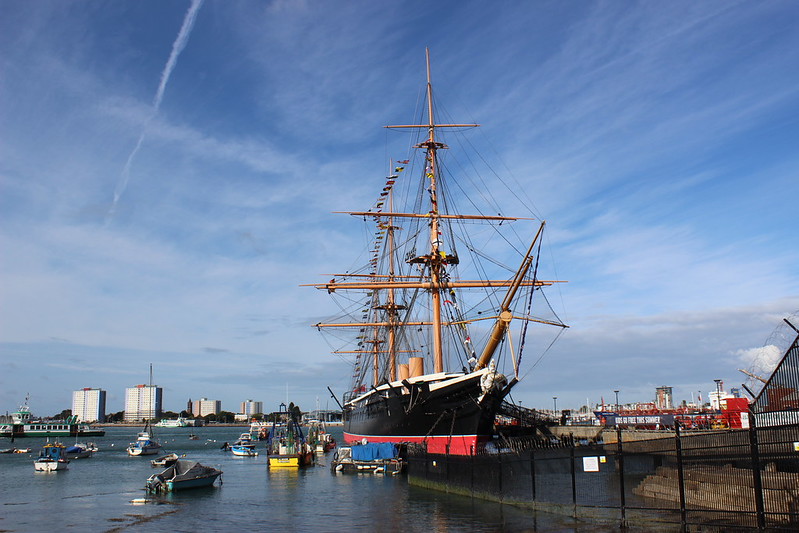
An Image of HMS Warrior from the front in the Portsmouth Historic Dockyard Portsmouth Visitor Guide

Portsmouth: Britain’s Maritime City

Home of the Royal Navy | HMS Victory & the Mary Rose | 170m Spinnaker Tower | Southsea Beach & Castle | D-Day Story Museum

βš“ Portsmouth at a Glance

500 years
Royal Navy
Heritage
10+
World-Class
Attractions
170 m
Spinnaker Tower
Height
1–3 Days
Ideal
Visit Length
  • βœ…Portsmouth Historic Dockyard – HMS Victory, Mary Rose Museum, HMS Warrior, HMS M.33, harbour tours β€” all on one 12-month ticket (adult from Β£46)
  • βœ…Spinnaker Tower – 170m sail-shaped landmark, 23-mile Solent views, glass Sky Walk 100m above the harbour (adult Β£18)
  • βœ…The D-Day Story – The 83-metre Overlord Embroidery, LCT 7074 landing craft, personal stories of Operation Overlord (adult Β£15.95)
  • βœ…Southsea Castle – Built by Henry VIII in 1544, panoramic Solent views, site where Henry watched the Mary Rose sink β€” FREE (Apr–Oct)
  • βœ…Southsea Beach – Two miles of free pebble-and-sand beach, seafront promenade, splash pool and rock gardens
  • βœ…Gunwharf Quays – 90 outlet stores, waterfront restaurants, and Portsmouth’s best harbour views β€” FREE to explore
  • βœ…Blue Reef Aquarium – Tropical sharks, walk-through underwater tunnel, 40+ displays on Southsea seafront (adult Β£13)
  • βœ…Old Portsmouth (Spice Island) – Ancient cobbled streets, the Cathedral, the Round Tower and Square Tower, and the oldest pubs in the city
  • βœ…Charles Dickens’ Birthplace – The Regency terraced house where Britain’s greatest novelist was born in 1812 (adult Β£6.60 | selected dates)
  • βœ…Millennium Promenade – Free 2.6-mile signed waterfront walk linking the Historic Dockyard to Southsea Castle through Old Portsmouth
  • βœ…Fort Nelson & Royal Armouries – Free Victorian hilltop fortress with 700 artillery pieces and panoramic harbour views, on Portsdown Hill north of the city via the M27

Why Visit Portsmouth?

Portsmouth is unlike any other city in Britain β€” and for visitors arriving from France or making a south coast trip, it consistently exceeds expectations. Here is why it deserves a place on any itinerary.

βš“ The World’s Greatest Naval Collection

No city on earth concentrates so much naval history into so small an area. HMS Victory β€” Nelson’s flagship at Trafalgar, still a commissioned Royal Navy vessel β€” the Mary Rose, and HMS Warrior are all within a short walk of each other at the Historic Dockyard. Together they span more than 300 years of British naval power and represent three distinct eras of warship design. Nowhere else can you walk from a Tudor carrack to an iron-hulled Victorian battleship in an afternoon.

πŸ–οΈ Southsea: A Resort in Its Own Right

Southsea is a proper seaside destination β€” two miles of free beach, the D-Day Story museum, a Henry VIII castle, a walk-through shark aquarium, and an independent food scene on Albert Road that rivals any city on the south coast. It is entirely separate in character from the naval city to the north, and many visitors find it the most enjoyable part of the trip.

πŸŽ‰ A City Fresh from Its Centenary

In 2026, Portsmouth celebrated 100 years since it was granted city status on 23 April 1926. The Portsmouth100 programme brought special exhibitions, the free Pride of Portsmouth Lion Trail (13 July–13 September 2026), a lighting installation by Turner Prize-nominated artist Nathan Coley at Southsea Castle’s lighthouse, and centenary editions of Armed Forces Day and Portsmouth Pride. The city’s year-round events calendar β€” from the International Kite Festival to the Victorious Festival β€” keeps going strong.

🚒 The Perfect Gateway β€” and Base

Portsmouth is the south coast’s most versatile base. The Isle of Wight is around 10 minutes away by hovercraft. Portchester Castle and the New Forest are within easy reach. Brittany, Normandy, and the Channel Islands are all served by direct ferries. Whether you are arriving from France or planning a south coast week, Portsmouth earns its place as a destination in its own right β€” not just a ferry port.

Portsmouth’s Extraordinary History

Few cities in Britain carry history as visibly as Portsmouth. Every stone here has a story β€” from Henry V’s fleet that sailed to Agincourt, to the flagship of Horatio Nelson, to the armada of ships that crossed the Channel on the night of 5–6 June 1944.

From Henry VIII to Horatio Nelson

Portsmouth’s story as a naval base begins in 1194, when Richard I recognised its natural harbour as ideal for a naval dockyard. But it was Henry VIII who transformed it. In 1545, Henry watched from Southsea Castle as his flagship the Mary Rose heeled and sank in the Solent during battle against a French fleet β€” a catastrophe that sealed the ship in the seabed for 437 years. Henry also built the city’s coastal defences, including Southsea Castle, which still stands free to visit today.

The great age of sail brought Portsmouth to the centre of British power. HMS Victory, launched in 1765 and Nelson’s flagship at Trafalgar on 21 October 1805, is the most famous warship in British history and still flies the White Ensign as a commissioned vessel of the Royal Navy. When Nelson died aboard her, his body was carried home in a cask of brandy to preserve it.

The Age of Iron: HMS Warrior

In 1860, HMS Warrior changed naval warfare forever. Britain’s first iron-hulled, armour-plated warship was so formidable that no enemy navy dared engage her β€” she never fired a shot in anger. She made every other warship in the world obsolete on the day she was launched, and she remains today the finest surviving example of the revolutionary Victorian naval engineering that made Britain the pre-eminent maritime power on earth.

Warrior was eventually decommissioned, spent decades as a floating oil jetty at Pembroke Dock, and was rescued and lovingly restored over 8 years before returning to Portsmouth in 1987. She is the oldest surviving iron-hulled warship in the world β€” and the only ship to be fully restored to her original Victorian condition.

Portsmouth and D-Day: The Gateway to Liberation

On the night of 5–6 June 1944, the largest seaborne invasion in history departed from the south coast of England. Portsmouth and its neighbouring harbours were at the heart of Operation Overlord β€” the plan to liberate Western Europe from Nazi occupation. General Eisenhower gave the final order to proceed from Southwick House, just north of Portsmouth. The armada that crossed the Channel that night β€” around 7,000 vessels β€” changed the course of the Second World War.

The D-Day Story museum on Southsea seafront is Britain’s only museum dedicated entirely to Operation Overlord. Its centrepiece is the Overlord Embroidery β€” 83 metres long, longer than the Bayeux Tapestry β€” commissioned as a tribute to all those who took part. LCT 7074, the last surviving D-Day landing craft tank (which after the war spent a chapter of its extraordinary life as a floating nightclub in Birkenhead), is now restored and open to visitors outside the museum.

Portsmouth Timeline

1194 β€” Richard I recognises Portsmouth Harbour as the ideal home for a royal naval dockyard.

1415 β€” Henry V’s fleet departs from Portsmouth to Agincourt.

1544 β€” Southsea Castle is completed as part of Henry VIII’s coastal defences.

1545 β€” Henry VIII watches the Mary Rose sink from Southsea Castle.

1765 β€” HMS Victory launched at Chatham; becomes Nelson’s flagship at the Battle of Trafalgar in 1805.

1860 β€” HMS Warrior launched, Britain’s first iron-hulled armoured warship.

1926 β€” Portsmouth is granted city status on 23 April.

1944 β€” D-Day planned and launched from Portsmouth; the Allied invasion fleet departs for Normandy on the night of 5 June.

1982 β€” The Mary Rose raised from the seabed after 437 years; now the centrepiece of her own purpose-built museum.

2026 β€” Portsmouth celebrates 100 years as a city with the Portsmouth100 programme.

Top Things to Do in Portsmouth

Portsmouth rewards exploration across two distinct areas: the Historic Dockyard and Gunwharf Quays on the harbour in the west of the city, and the Southsea seafront stretching east along the Solent. Here is everything worth seeing, with admission prices to check before you go.

Portsmouth Historic Dockyard

Adult from Β£46 | Child (3–15) from Β£31 | Family (1 adult + 3 children) from Β£94 | Family (2 adults + 3 children) from Β£115 | 12-month ticket β€” all attractions included | Location: Victory Gate, HM Naval Base, Portsea, Portsmouth PO1 3LJ | Note: Under-3s FREE

The Historic Dockyard is the single greatest concentration of naval heritage in the world, and Portsmouth’s unmissable attraction. One ticket covers everything: HMS Victory (Nelson’s flagship, the most famous warship in British history, still a commissioned Royal Navy vessel); the Mary Rose Museum (Henry VIII’s flagship, raised from the Solent in 1982, with thousands of recovered Tudor artefacts); HMS Warrior 1860 (Britain’s first iron-hulled armoured warship); HMS M.33 (a rare surviving First World War vessel, veteran of the Gallipoli campaign); the National Museum of the Royal Navy galleries; and harbour tours offering close views of modern Royal Navy frigates and destroyers. The Dockyard is also home to the new Royal Marines Museum, due to open in 2026 β€” check its opening status before you visit.

Your ticket also includes a waterbus across the harbour to Gosport, where the Royal Navy Submarine Museum and Explosion Museum of Naval Firepower are located. HMS Alliance, a 1945 submarine, is the highlight β€” tour her interior with ex-submariners who know the stories. Note: the Explosion and Submarine Museums are closed on Mondays and Tuesdays in school term time.

πŸ’‘ Victory Live: The Big Repair β€” HMS Victory is currently undergoing its largest conservation project in history. The outside of the ship is scaffolded, but the gun decks, quarterdeck, and interior remain accessible. A dedicated visitor experience explains the extraordinary work of the shipwrights and conservators keeping her alive for future generations. Allow a full day for the complete Dockyard experience.

Spinnaker Tower

Adult Β£18 | Child (4–15) Β£14 | Senior Β£17 | Under-4 FREE | Location: Gunwharf Quays, Portsmouth PO1 3TT | Open: Daily 10:30am–6pm (last entry 5:30pm) | Duration: 60–90 minutes

Standing 170 metres above Portsmouth Harbour, the Spinnaker Tower is the most distinctive building on the south coast β€” designed to evoke the sail of a yacht in full wind, and visible for miles in every direction. A high-speed lift whisks you to the View Deck at 100 metres, where interactive touchscreens help you identify the landmarks spread across a 23-mile panorama: the Historic Dockyard below, Southsea Castle, the Isle of Wight across the Solent, and the South Downs on a clear day.

The glass Sky Walk at 100 metres is the centrepiece experience β€” a transparent floor over the harbour that tests even confident visitors. The open-air Sky Garden at 110 metres adds fresh sea air and even wider views. The Clouds CafΓ© at 105 metres serves afternoon tea high above the harbour β€” one of the more memorable venues for a cup of tea in England. Book in advance, particularly in summer.

The D-Day Story

Adult Β£15.95 | Child (5–17) Β£8 | Senior (60+) Β£12.70 | Under-5 FREE | Location: Clarence Esplanade, Southsea PO5 3NT | Open: Daily 10am–5:30pm (Apr–Sept), 10am–5pm (Oct–Mar)

Britain’s only museum dedicated entirely to Operation Overlord β€” the D-Day landings of 6 June 1944 β€” sits on the Southsea seafront within easy walking distance of where much of the invasion fleet was assembled. The museum tells the story through personal accounts, vehicles, uniforms, medals, and the extraordinary Overlord Embroidery: at 83 metres (272 feet) in length, it is longer than the Bayeux Tapestry, and was commissioned as a tribute to all those who took part in the liberation of Western Europe. The scale and craftsmanship are remarkable, and the accompanying audio commentary in six languages is worth using.

Outside, LCT 7074 β€” the last surviving D-Day landing craft tank β€” is included in your ticket. Step aboard to explore the Sherman Grizzly and Churchill Crocodile tanks she carries, the officers’ quarters, the wheelhouse, and the gun deck. Her post-war story is extraordinary: she later became a floating nightclub before sinking and being rescued in a major restoration project. Note: The museum is free to visit on Remembrance Sunday each November.

Southsea Castle

FREE admission | Season: Tues–Sun, April–October | Hours: 10am–5:30pm (last admission 5pm) | Tip: check opening times before you visit, as parts of the castle can close for refurbishment

Built in 1544 as part of Henry VIII’s coastal defence programme, Southsea Castle occupies one of the most historically charged spots in England: it is where the king stood and watched his beloved flagship the Mary Rose heel and sink in July 1545, barely a year after the castle was completed. The castle remained an active defence installation for more than three centuries and now stands as a free attraction on the Southsea seafront.

Visitors can explore the keep, walk the ramparts, descend into the 19th-century tunnel built to defend the castle moat, and enjoy panoramic views from the top of the keep across the Solent to the Isle of Wight. Look out for the castle’s lighthouse, lit up by Nathan Coley’s centenary installation. The Courtyard Restaurant is open year-round.

Southsea Beach & Seafront

FREE | Access: Continuous from Old Portsmouth to the eastern end at Eastney | Distance: Approximately 2 miles of seafront

Southsea beach is Portsmouth’s free playground β€” a wide shingle and sand beach stretching along the Solent shore, with the Isle of Wight forming the horizon. The seafront promenade connects the D-Day Story, Southsea Castle, the Blue Reef Aquarium, the Pyramids leisure centre, Southsea Rock Gardens, and the Naval War Memorial. The splash pool is a family favourite in summer. The seafront cafΓ©s serve fish and chips, ice cream, and the kind of seaside food that is best eaten in sea air.

Gunwharf Quays

FREE to explore. Built on the site of the former Royal Navy Armaments Depot, Gunwharf Quays is Portsmouth’s premier shopping and dining destination: 90 outlet stores including leading fashion brands, over 30 restaurants and bars, and the best harbour views in the city. The Spinnaker Tower rises from its waterfront. Portsmouth Harbour station is adjacent β€” ideal for those arriving by train.

Blue Reef Aquarium

Adults Β£13 | Children (3–12) Β£10 | Concession Β£12 | Under-3 FREE. Tropical Shark Lagoon with walk-through underwater tunnel, 40+ displays covering British coastal waters, Mediterranean, and tropical coral reef, Asian short-claw otters, seahorse breeding programme, and summer splash park. Location: Clarence Esplanade, Southsea PO5 3PB.

Old Portsmouth (Spice Island)

FREE. The original Portsmouth β€” cobbled streets, ancient city walls, the Cathedral of St Thomas of Canterbury, the Round Tower (1418) and Square Tower guarding the harbour mouth. Spice Island at the harbour mouth has the oldest pubs in Portsmouth, including the Still & West with the finest harbour views in the city. The Camber Dock is the working heart of Old Portsmouth.

Portsmouth Cathedral

FREE. The Cathedral Church of St Thomas of Canterbury, dating from around 1180, is one of the oldest buildings in Portsmouth. A place of worship for sailors for over 800 years, it contains memorials to those lost at sea and a light-filled nave completed in the 20th century. Address: High Street, Old Portsmouth PO1 2HH. Open daily.

πŸ“š Charles Dickens’ Birthplace

Adult Β£6.60 | Senior Β£5.90 | Child/Student Β£5.05. Free for Portsmouth residents (PO1–6). The small terraced house at 393 Old Commercial Road where one of Britain’s greatest novelists was born in 1812. Three Regency-furnished rooms β€” parlour, dining room, and the bedroom where Dickens was born β€” plus an exhibition featuring the couch on which he died, his snuff box, inkwell, and paper knife. Open: Selected dates throughout the year, 10am–4:30pm (last admission 4pm) β€” check charlesdickensbirthplace.co.uk before visiting. Nearest station: Portsmouth & Southsea (0.7-mile walk).

🚢 The Millennium Promenade

FREE. Portsmouth’s 2.6-mile signed waterfront walking trail β€” the perfect way to connect all the city’s key areas on foot. Starting from the Historic Dockyard at The Hard and finishing at Southsea Castle, the route passes through Gunwharf Quays, along the Old Portsmouth waterfront past the Round Tower and Square Tower, through Spice Island, and along the Southsea esplanade. Look for the chain-link motif set into the pavement β€” it symbolises the harbour defence chain once stretched across the entrance at times of threat. Column-mounted lanterns light the way at night. Allow 60–90 minutes at a gentle pace; longer if you stop at the pubs and viewpoints along the way.
Sample Portsmouth Itineraries

Portsmouth has enough to fill two or three days comfortably. Here are suggested itineraries for different visit lengths β€” including a day before your evening ferry to St Malo.

One Day in Portsmouth: The Essential Visit

Morning (9:30am): Arrive at Portsmouth Historic Dockyard as it opens. Go directly to HMS Victory first before it gets busy β€” allow about 45 minutes on board, and the ship is extraordinary. Then spend an hour in the Mary Rose Museum.

Late morning: Cross to HMS Warrior β€” allow an hour. She is less visited than Victory and the experience is arguably more immersive. Grab lunch at the Dockyard cafΓ© or take the short walk to Gunwharf Quays.

Afternoon (2pm): Walk to Gunwharf Quays, explore, then ascend the Spinnaker Tower for the 23-mile Solent view β€” the city makes perfect sense from up here.

Late afternoon: Walk or taxi to Southsea for a stroll along the seafront, a look at Southsea Castle (free, open April–Oct), and fish and chips on the promenade. Catching the 20:15 ferry to St Malo? Foot passenger check-in closes at 19:15 and vehicle check-in at 19:30, so aim to be at the port by about 18:15–18:30 β€” see our check-in guide.

Two Days: Portsmouth & Southsea in Full

Day 1 β€” The Dockyard: Give the entire day to the Historic Dockyard. HMS Victory, Mary Rose Museum, HMS Warrior, HMS M.33, and the National Museum galleries fill a full day comfortably. If time allows, take the waterbus across to the Royal Navy Submarine Museum in Gosport to see HMS Alliance.

Day 2 β€” Southsea & the City: Start with the D-Day Story and LCT 7074 on Southsea seafront (open at 10am). Walk along the seafront to Southsea Castle (free). Blue Reef Aquarium is next door β€” ideal for families with children. Afternoon: walk or bus back to Old Portsmouth to explore Spice Island, the Cathedral, and the ancient walls. End at the Still & West pub for harbour views at sunset.

Where to Eat in Portsmouth

Portsmouth has a genuinely good food scene, centred on Southsea’s independent restaurants rather than the chain-dominated waterfront at Gunwharf Quays. Here’s a practical guide to eating well across the city’s different areas.

What to Eat in Portsmouth

Fish & chips β€” the essential Southsea experience, best eaten on the seafront promenade. Seafood β€” fresh catch of the day and local oysters feature on several Southsea menus. Pub food β€” Old Portsmouth’s historic pubs (the Still & West, the Spice Island Inn) serve solid British food with unbeatable harbour views. Albert Road, Southsea β€” the city’s independent restaurant corridor: international cuisines, cafΓ©s, tapas bars, and specialist shops all within a short walk.

Still & West, Old Portsmouth

The most atmospheric pub in Portsmouth β€” a historic waterfront inn right at the harbour mouth in Old Portsmouth. The upper deck has direct views across to Gosport and onto every ship entering or leaving. Serves classic British pub food including fish and chips; arrive early at weekends. Address: 2 Bath Square, Old Portsmouth PO1 2JL.

The Briny, Southsea

Southsea’s best seafood restaurant β€” a casual beachfront venue on the Clarence Esplanade with direct sea views and outdoor dining. Fresh catch of the day, oysters, and a selection of non-seafood dishes. Gluten-free and vegan options available. Booking recommended in summer. Address: Clarence Esplanade, Southsea PO5 3AA.

Southsea Beach CafΓ©

A popular seafront cafΓ© directly on Southsea beach offering locally sourced seasonal food with Solent views. Particularly good for breakfast and brunch β€” the full cooked breakfasts and eggs dishes are well regarded. Has a wood burner for cooler days and outdoor seating for summer. Serves coffee all day.

Pie & Vinyl, Castle Road, Southsea

One of Southsea’s most characterful independent spots β€” a vintage cafΓ© combining a record shop with inventive pie dishes. Pies change regularly; vegan, vegetarian, and meat options all available. Small inside, but a genuinely local institution that sums up Southsea’s independent spirit. Address: 27 Castle Road, Southsea PO5 3DE.

Albert Road & Elm Grove, Southsea

The heart of Southsea’s independent food scene β€” a short stretch with Spanish tapas bars, Belgian beer cafΓ©s, Italian trattorias, Latin American restaurants, and artisan coffee shops. Anchor & Malt on Albert Road is widely considered one of the best fish and chip shops in Portsmouth. Worth an afternoon stroll even if you’re just browsing.

Gunwharf Quays

30+ waterfront restaurants and bars, with Spinnaker Tower views. Primarily chain restaurants β€” convenient if you’re already at the Dockyard and want a quick lunch, but the independent Southsea scene offers better value and more character for an evening meal.

Things to Do Near Portsmouth

Portsmouth is an outstanding base for the wider south coast and for the Isle of Wight β€” all within easy reach for a day trip or short detour.

🏝️ Isle of Wight

The Isle of Wight is around 10 minutes by hovercraft from Southsea (Hovertravel from Clarence Esplanade to Ryde), around 22 minutes on the Wightlink FastCat from Portsmouth Harbour to Ryde, or around 45 minutes on the Wightlink car ferry from Portsmouth to Fishbourne. Cowes, Yarmouth, the Needles, Carisbrooke Castle, Ventnor, and Osborne House (Queen Victoria’s summer residence) all make outstanding day trips.

🏰 Portchester Castle

Portchester Castle has some of the most complete Roman fortress walls in northern Europe, enclosing a Norman keep and a 12th-century church. The grounds within the Roman walls are free to explore; there’s a charge to enter the keep (English Heritage). It’s a short drive north-west of Portsmouth via the A27, or a train ride to Portchester station. An unmissable detour for history lovers.

🧱 Chichester

The Roman city of Chichester is 19 miles east along the A27 β€” approximately 35 minutes by car or direct train. Chichester Cathedral, the Pallant House Gallery (one of Britain’s finest collections of 20th-century art), and the Chichester Festival Theatre make it one of the most rewarding cities in the south for a half or full day out.

βš“ Gosport & HMS Alliance

Cross Portsmouth Harbour by the Gosport Ferry (passenger only, frequent sailings throughout the day) for the Royal Navy Submarine Museum and HMS Alliance β€” a 1945 A-class submarine and the only remaining Second World War-era submarine open to visitors in the UK. Guided by ex-submariners, the tour is outstanding. Also included in the Portsmouth Historic Dockyard ticket, with a waterbus from the Dockyard.

🌿 New Forest

The New Forest National Park begins around 20 miles west of Portsmouth. Free-roaming ponies, ancient woodland, Lyndhurst village, Beaulieu Motor Museum, and Exbury Gardens are all within 30–45 minutes of the city centre. The National Park covers 219 square miles and is ideal for walking, cycling, and a complete change of pace from the historic city.

🚒 St Malo by Ferry

Brittany Ferries sails from Portsmouth to St Malo, Caen (Ouistreham), and Cherbourg in France, as well as to Santander and Bilbao in Spain β€” making Portsmouth one of the finest departure points for Brittany and Normandy. The St Malo overnight sailing (departing 20:15, arriving 08:45 French time) is the classic way to reach one of the most beautiful walled cities in France. See our St Malo city guide for everything you need.

πŸ”« Fort Nelson & the Royal Armouries

FREE admission | Parking Β£3. A fully restored Victorian hilltop fortress on Portsdown Hill overlooking Portsmouth Harbour β€” one of the most dramatic viewpoints on the south coast. Fort Nelson is home to the national Royal Armouries collection of artillery: 700 pieces spanning 600 years, including a 15th-century Turkish bombard, a First World War railway howitzer, and sections of the Iraqi supergun seized in 1990. 19 acres of ramparts, underground tunnels, and parade ground to explore. Daily guided tours of the fort. Regular gun firings at special events. CafΓ© and museum shop on site.

Location: Portsdown Hill Road, Fareham PO17 6AN β€” north of Portsmouth via the M27 (J11). Open: Tues–Sun 10am–4pm (term time), daily 10am–5pm (school holidays). Closed 24–26 December.

Practical Information for Visiting Portsmouth

Portsmouth is easy to navigate on foot between its main areas. Here is everything you need from this Portsmouth visitor guide’s practical section to plan your visit.

Getting to Portsmouth

By car: The M27 connects to Portsmouth from the west (Southampton, New Forest) and the A27 from the east (Chichester, Brighton). The M275 leads directly into the city from the M27 junction 12. The city is well signposted β€” follow brown tourism signs to Historic Dockyard or Gunwharf Quays. Note: Portsmouth is an island city with limited road access; expect congestion in peak summer and on bank holiday weekends.

By train: Portsmouth Harbour station (directly adjacent to the Historic Dockyard and Spinnaker Tower, and a 5-minute walk from Gunwharf Quays) has direct services from London Waterloo (around 1 hour 30 to 1 hour 50 minutes), Southampton (around 45–50 minutes), and Brighton (around 1 hour 15 minutes). Portsmouth & Southsea station is closer for the D-Day Story and Southsea attractions.

By ferry from France: Brittany Ferries operates routes from St Malo, Caen and Cherbourg (as well as Santander and Bilbao in Spain), and Condor Ferries sails from the Channel Islands. Portsmouth International Port is at the end of the M275 at the northern end of the city β€” follow the brown tourism signs to reach the main attractions on arrival.

Parking in Portsmouth

Historic Dockyard: The official dockyard car park has 295 spaces, 400 yards from the entrance at Victory Gate. Alternatively, Gunwharf Quays underground car park has 1,450 spaces directly beneath the shopping centre β€” walk 10 minutes to the dockyard entrance, or take the short walk past the Spinnaker Tower.

Southsea: Pay-and-display seafront parking runs along Clarence Esplanade, directly outside the D-Day Story and Blue Reef Aquarium. The D-Day Story has its own car park adjacent to the museum β€” also the most convenient for Southsea Castle. Pyramids car park on Clarence Esplanade is a short walk from the castle.

Park and Ride: Portsmouth operates Park and Ride services from the edge of the city, with buses running to the Hard Interchange near the Historic Dockyard. This is strongly recommended on summer weekends and bank holidays when city centre parking fills early.

Getting Around Portsmouth

The Historic Dockyard, Gunwharf Quays, and Old Portsmouth are all walkable from Portsmouth Harbour station (5–10 minutes). Southsea’s main attractions are approximately 1–1.5 miles from the Harbour area β€” comfortably walkable in 25–35 minutes along the seafront promenade, or quick by taxi or local bus.

Isle of Wight: Hovertravel from Clarence Esplanade, Southsea to Ryde (around 10 minutes each way) is the fastest and most fun crossing. Wightlink runs the FastCat from Portsmouth Harbour to Ryde and car ferries from its Gunwharf terminal to Fishbourne. Red Funnel sails from Southampton. The Gosport Ferry runs a frequent passenger service across the harbour from The Hard to Gosport throughout the day.

Best Time to Visit Portsmouth

May–September: Best weather for Southsea beach, the Spinnaker Tower’s open-air Sky Garden, and the seafront. All Dockyard attractions are open seven days including the Explosion and Submarine Museums. The Victorious Festival (August, Southsea Common) is one of the best outdoor music festivals on the south coast β€” note that during festival days, the D-Day Story is restricted to festival ticket holders only.

October–April: The Historic Dockyard, Spinnaker Tower, D-Day Story, and Blue Reef Aquarium are all open year-round. Southsea Castle closes for winter (reopens April). The Explosion Museum and Submarine Museum in Gosport are closed on Mondays and Tuesdays outside school holidays. Weekday visits in autumn and winter are quieter, easier to park, and often have shorter queues aboard the ships.

Portsmouth Visitor Guide: Frequently Asked Questions

Everything visitors most commonly ask about Portsmouth β€” answered with up-to-date information for 2027.

Is Portsmouth worth visiting?

Absolutely β€” Portsmouth is one of the most historically rich cities in Britain and an outstanding destination for a day trip or short break. The Historic Dockyard alone, with HMS Victory, the Mary Rose Museum, and HMS Warrior, is genuinely world-class. Add the Spinnaker Tower, the D-Day Story, Southsea beach and castle, Blue Reef Aquarium, Gunwharf Quays, and Old Portsmouth, and there is more than enough for two full days. Portsmouth also makes an exceptional ferry departure point for Brittany, Normandy, and the Isle of Wight.

How many days do you need in Portsmouth?

One full day is enough to see the Historic Dockyard highlights and Spinnaker Tower. Two days gives you time to add Southsea properly β€” the D-Day Story, Southsea Castle, and Blue Reef Aquarium β€” along with Old Portsmouth and Gunwharf Quays. Three days allows for a day trip to the Isle of Wight or Portchester Castle. Most people underestimate how much there is in Portsmouth: the Historic Dockyard alone can fill a full day if you do justice to HMS Victory, the Mary Rose, HMS Warrior, and the Submarine Museum in Gosport.

How much does Portsmouth Historic Dockyard cost?

The Portsmouth Historic Dockyard all-inclusive ticket costs from Β£46 for adults, from Β£31 for children (3–15), from Β£94 for one adult and up to three children, and from Β£115 for two adults and up to three children. Crucially, this is a 12-month ticket β€” you can visit as many times as you like for a full year. UK military personnel with a valid MOD90 card receive free entry. Booking online in advance is usually cheapest, and signing up to the Dockyard’s email newsletter gets you a 10% discount code. Always check historicdockyard.co.uk for current pricing.

Can you see HMS Victory from outside without paying?

HMS Victory sits within the secure HM Naval Base, so you cannot see her up close without a ticket to the Portsmouth Historic Dockyard. However, HMS Warrior is moored right by the entrance and is clearly visible from the public waterfront at The Hard. The best free views of the naval basin are from the Gosport side of the harbour (reached by the Gosport Ferry from The Hard), where you can see Victory’s masts above the dockyard buildings and several modern Royal Navy warships at close range.

Is Southsea Castle free to visit?

Yes β€” Southsea Castle is free to visit. It is open Tuesday to Sunday from April to October (10am–5:30pm, last admission 5pm). Visitors can explore the keep, the ramparts, and the 19th-century tunnel. The Courtyard Restaurant is open year-round for food and drinks. No advance booking is required, but check opening times before you visit.

What is the best area to stay in Portsmouth?

Southsea is the best area to stay for most visitors β€” it has the widest range of independent hotels, B&Bs, and guesthouses, is close to the beach, and is within easy reach of both the Dockyard (20 minutes by bus or taxi) and Southsea’s own attractions. Gunwharf Quays is ideal if you want to be right next to the Spinnaker Tower and the Historic Dockyard, with easy access to the train station. Old Portsmouth has the most atmospheric character but fewer accommodation options. Budget travellers have good options near Portsmouth Harbour station.

How far is the Isle of Wight from Portsmouth?

The Isle of Wight is just across the Solent, and the crossings are short. Hovertravel from Southsea’s Clarence Esplanade to Ryde takes around 10 minutes and is the fastest option. The Wightlink FastCat from Portsmouth Harbour to Ryde takes around 22 minutes, and Wightlink car ferries from Portsmouth to Fishbourne take around 45 minutes. Red Funnel operates from Southampton (not Portsmouth) for the western end of the island. The Isle of Wight makes an outstanding day trip.

Was Charles Dickens born in Portsmouth?

Yes β€” Charles Dickens was born on 7 February 1812 at 393 Old Commercial Road, Portsmouth, where his father John Dickens was working as a naval pay clerk. The family moved away when Charles was just two years old. The small Regency terraced house where he was born is now the Charles Dickens’ Birthplace Museum, open on selected dates throughout the year. Admission is Β£6.60 for adults, with free entry for Portsmouth residents. Dickens returned to Portsmouth several times during his life but famously failed to find his own birthplace on his last visit in 1866 β€” it is now clearly signposted.

Can you sail to France from Portsmouth?

Yes β€” Portsmouth is one of Britain’s busiest cross-Channel ferry ports. Brittany Ferries sails to St Malo, Caen (Ouistreham), and Cherbourg, as well as to Santander and Bilbao in Spain. The overnight sailing to St Malo (departing 20:15, arriving 08:45 French time) is especially popular β€” you wake up in one of the most beautiful walled cities in France. See our St Malo city guide for full details on things to do once you arrive.

What was Portsmouth100?

Portsmouth100 was the year-long programme of events marking Portsmouth’s centenary as a city β€” it was on 23 April 1926 that Portsmouth was officially granted city status. The programme ran throughout 2026 with civic ceremonies, cultural exhibitions, community events, and public art. Highlights included the Pride of Portsmouth Lion Trail β€” 30+ uniquely decorated lion sculptures forming a free art trail across the city from 13 July to 13 September 2026 β€” and a lighting installation by Turner Prize-nominated artist Nathan Coley at the historic lighthouse at Southsea Castle, alongside centenary editions of Armed Forces Day, Portsmouth Pride, and the International Kite Festival. For current events, see visitportsmouth.co.uk.

Plan Your Portsmouth Ferry Journey

βš“

St Malo Ferry

Complete guide to the Portsmouth to St Malo ferry – ships, timetables, facilities, cabins, and booking tips

Portsmouth – St Malo Guide β†’

πŸ›οΈ

Ferry Cabins

Admiral suites, Commodore, pet-friendly, and family cabins on MV Saint-Malo and Armorique

Cabins Guide β†’

🍽️

Onboard Facilities

Restaurants, bars, Wi-Fi, entertainment, shopping, and kids’ activities on Portsmouth St Malo ferries

Facilities Guide β†’

⏰

Ferry Timetable

2027 sailing schedule, departure times, seasonal variations, and frequency for Portsmouth St Malo route

Timetables β†’

Ready to Discover Portsmouth?

Portsmouth is a city that earns its reputation. Walk the gun deck of HMS Victory β€” the most famous warship in British history β€” and the weight of two centuries of naval history is impossible to ignore. Stand on the Spinnaker Tower’s glass floor and the whole Solent stretches below you: the ferries to France, the Isle of Wight on the horizon, the aircraft carriers in the harbour. Sit on Southsea beach at dusk with fish and chips and the lights of the isle flickering across the water. Portsmouth is not just about the past β€” it is a living port city that has always looked outward towards the sea.

With this complete Portsmouth visitor guide, you have everything you need: the Historic Dockyard with Nelson’s flagship, the Tudor time capsule of the Mary Rose, the extraordinary iron warship HMS Warrior, the D-Day Story and its 83-metre Overlord Embroidery, the views from the Spinnaker Tower, Southsea’s free castle and seafront, Gunwharf Quays, Old Portsmouth, and the ferries to France β€” all updated for 2027. Britain’s maritime city is waiting.

βš“

Book the Dockyard

HMS Victory, Mary Rose Museum, HMS Warrior β€” the world’s greatest naval collection, all on one annual ticket

πŸ—Ό

Ascend the Tower

170m Spinnaker Tower β€” glass Sky Walk, open-air Sky Garden, 23-mile Solent views

πŸ–οΈ

Explore Southsea

Free beach, Henry VIII’s castle, D-Day Story, Blue Reef Aquarium β€” all on one stunning seafront

🚒

Sail to France

Brittany Ferries to St Malo, Caen, and Cherbourg β€” direct from Portsmouth

Going to France via Portsmouth?

Whether you’re travelling to St Malo, Caen, or Cherbourg β€” Portsmouth’s Historic Dockyard, Spinnaker Tower, Southsea seafront, and the Isle of Wight are all within easy reach of the International Port. Britain’s maritime city makes the perfect first stop β€” or last stop β€” on any channel crossing.

Book Brittany Ferries from Portsmouth β†’

Safe travels, and may Britain’s maritime city exceed every expectation.