Riding a Motorbike in France: The Complete 2026 Guide for UK Riders

France is one of the finest motorcycle touring destinations in the world β€” over a million kilometres of road, from Brittany’s Atlantic coastline to the high passes of the Alps and Pyrenees, with a road culture that genuinely respects motorcyclists. But riding in France as a UK rider means understanding a set of rules that differ significantly from home. Some are familiar. Several are not. Get them wrong and you face on-the-spot fines, confiscated documents, or worse. This guide covers everything you need to know about motorbike touring in France from St Malo, including speed limits, mandatory equipment, documents, gloves, hi-viz, radar detectors, Crit’Air stickers, lane filtering, and the best routes to ride straight from the port at St Malo itself.

Last updated: March 2026 | All rules verified. French law changes frequently β€” always check before you travel.

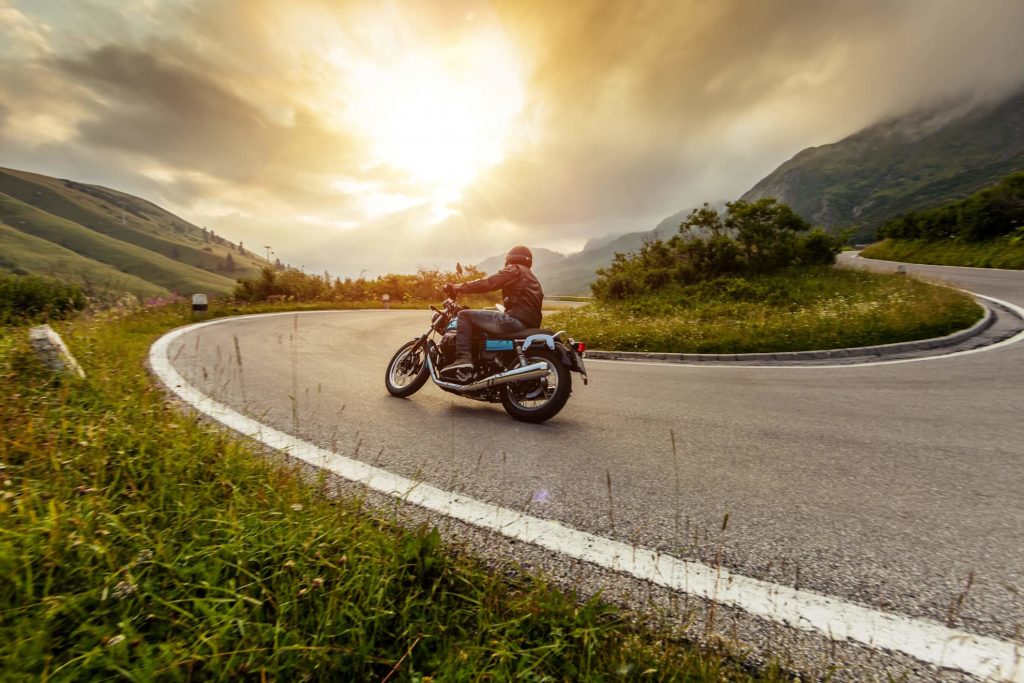
Motorbike on road in france infront of sunset/rise. motorbike touring in France from St Malo

🏍️ Riding in France β€” Fast Facts for UK Motorcyclists

130 kph
Motorway limit (80 mph)
80 kph
Rural roads (50 mph)
0.05%
BAC alcohol limit
18+
Minimum riding age in France
  • βœ… Hi-viz vest mandatory β€” must be accessible from the seat and worn if stopped at roadside
  • βœ… CE-approved gloves mandatory β€” for rider and pillion. Fine up to €75 for non-compliance
  • βœ… Dipped headlights at all times β€” even in full daylight. Required by French law
  • βœ… Radar detectors illegal β€” heavy fines and possible bike confiscation. GPS camera alerts must be disabled
  • βœ… Crit’Air pollution sticker required β€” needed to enter low-emission zones in French cities. €4 from the official website
  • βœ… Lane filtering now legal β€” since January 2025, on motorways and dual carriageways under specific conditions

Book Motorbike Crossing with Brittany Ferries

Getting Your Head in the Right Place β€” First Miles in France

Stepping off the ferry at St Malo at 08:15 and immediately hitting the N137 is one of the great pleasures of motorcycling from the UK. But those first few miles deserve extra concentration. You’ve been on the ship all night. You’re now on the right-hand side of the road. Your brain needs time to recalibrate.

It’s a well-documented phenomenon among experienced tourers β€” the moments most likely to catch you out are the ones where you pull out of a petrol station, a car park, or a quiet side road and instinctively default to the left. The golden rule on the continent: think right, look left. Say it out loud if you need to. A useful tip is to deliberately use fuel stations on your own side of the road to avoid crossing traffic β€” and to be especially alert when leaving.

Speeds are shown in kilometres per hour. If your speedo is analogue and doesn’t have a kph scale, small sticker labels on the face showing the main limits are a practical solution β€” or use a sat nav or phone displaying kph. Most modern digital speedos can switch between mph and kph in the settings.

Brittany roads directly from St Malo are a perfect way to ease in β€” traffic is light, roads are wide, and the pace is unhurried. Use the first 30 miles to settle before you start pushing on.

Speed Limits in France for Motorcyclists β€” 2026

Speed limits in France apply equally to motorcycles and cars, with one important exception for new riders. Limits are rigorously enforced β€” static and mobile speed cameras are extremely common, and unmarked police vehicles operate on all road types. On-the-spot fines are standard and must be paid immediately. Note that from December 2025, tougher penalties apply for exceeding the speed limit by more than 50 kph.

Road Type Dry Wet / Rain Approx. MPH
Motorway (Autoroute / PΓ©age) 130 kph 110 kph 80 mph
Dual Carriageway / Express Highway 110 kph 100 kph 68 mph
Rural Roads (outside towns) 80 kph 80 kph 50 mph
Urban / Town / Village 50 kph 50 kph 31 mph
Some town centres / near schools 20–30 kph 20–30 kph 12–18 mph

⚠️ Town Speed Limits β€” No Signs

This catches UK riders out constantly. In France, the 50 kph urban limit begins the moment you pass the town or village name sign β€” there is no separate speed limit sign as there would be in the UK. The limit ends when you pass the same name crossed out at the far edge of the settlement. You must know the rule, because the signs won’t remind you.

πŸŽ‚ New Riders β€” Lower Limits Apply

If you have held your motorcycle licence for fewer than three years, lower limits apply in France: 110 kph on motorways, 100 kph on dual carriageways, and 80 kph on rural roads. The same limits also apply to anyone riding on an A2 licence category. These apply regardless of the age of the rider.

πŸ“Έ Speed Cameras & Enforcement

Speed cameras are extremely common in France β€” fixed cameras, mobile cameras and unmarked police vehicles all operate on national and rural roads. Fines are payable on the spot. Exceeding the limit by more than 40 kph can result in your licence being confiscated at the roadside. From December 2025, exceeding by more than 50 kph may result in criminal charges. If you cannot pay a fine, they can require you to visit a cash machine.

🚫 Radar Detectors & GPS Speed Camera Alerts β€” Illegal in France

Radar detectors are completely illegal in France β€” even if switched off and not in use. If one is found on your bike, the fines are very heavy and your bike can be confiscated. GPS speed camera warning alerts must also be disabled before entering France β€” French law prohibits devices that warn of camera locations, even if the device is primarily a navigation tool. Check your sat nav or phone settings and switch off any “speed camera alert” or “safety camera” feature before crossing the border. Some manufacturers allow you to remove French camera data entirely β€” check with your device’s documentation.

Mandatory Equipment for Motorcyclists in France

France has several legally required items that UK riders must carry or wear. Some are familiar; several are not. The list below reflects current requirements as of 2026. French law changes regularly, so always verify before travel.

🦺 Hi-Viz Vest β€” Mandatory

You must carry a CE-marked hi-viz vest or jacket while riding in France. It must be accessible from the seat of the motorcycle without dismounting β€” so a tank bag or top of a pannier is ideal. You do not have to wear it while riding, but you must put it on immediately if you stop at the roadside due to a breakdown, puncture or accident.

Fines: €11 for not carrying one; €135 for not wearing it when stopped at the roadside. Pillion passengers are subject to the same rules and fines. If your jacket has sufficient built-in hi-viz strips, this may satisfy the requirement β€” but a cheap vest in the tank bag is the safest approach.

🧀 Gloves β€” Mandatory

CE-approved motorcycle gloves are legally required for all riders and pillion passengers in France. This has been law since 2017. The gloves must carry a CE approval marking β€” standard protective motorcycle gloves will almost always comply, but fashion or non-protective gloves do not.

Fine: up to €75 for non-compliance. As most serious riders already wear good gloves, this is rarely an issue in practice β€” but worth knowing if you’re considering riding without, particularly in hot weather.

πŸ’‘ Dipped Headlights β€” Always On

French law requires all motorcycles to ride with dipped headlights switched on at all times β€” even in broad daylight. Most modern bikes have automatic daytime running lights that satisfy this requirement, but if your bike doesn’t switch on automatically, make it a habit to check your lights every time you start the engine. Police can stop and fine you for riding without lights in France.

β›½ Crit’Air Pollution Sticker

France’s Crit’Air scheme requires all vehicles β€” including motorcycles β€” to display a colour-coded emissions sticker when entering low-emission zones (ZFEs) in major cities. Enforcement is by camera, so there’s no avoiding it. Cities including Paris, Lyon, Grenoble, Strasbourg and others have active ZFEs.

The sticker costs around Β£4 and is ordered online from the official French government site: certificat-air.gouv.fr. Order well before your trip as they are posted to your home address and can take 2–3 weeks from outside France. Fines for non-compliance can reach €68 for motorcycles. Even if you don’t plan to ride through major cities, it’s a worthwhile precaution.

πŸͺ– Helmet β€” ECE 22-05 Standard

Your helmet must conform to ECE regulation 22-05 (or the French NF standard). Almost all helmets sold in the UK for the past decade comply β€” check the marking inside your helmet if unsure. Half-helmets that don’t cover the ears are not legal in France.

Reflective stickers on helmets: French law technically requires reflective stickers on four points of your helmet (front, rear, and both sides). Enforcement against foreign riders is inconsistent, but the legal requirement exists. Helmet sticker kits are cheap and widely available β€” fitting them before travel removes any ambiguity.

πŸ”¦ Spare Bulbs

Although not strictly compulsory for motorcycles in France, police can refuse to allow you to continue riding if a bulb has failed and you have no replacement. Most of Europe requires spare bulbs to be carried. A small kit of your bike’s bulb types takes up no space and removes any argument. Note this is not relevant for bikes with LED headlights β€” LEDs are not user-replaceable in the field and police are aware of this.

πŸ’‘ Spectacles: If you need to wear glasses or contact lenses to ride, French law requires you to carry a spare pair of spectacles. You will face a fine if stopped without them. This applies to all drivers and riders who require corrective eyewear.

Documents to Carry When Riding in France

A gendarmerie stop is not unusual on popular touring routes β€” having all your documents in order makes the process quick and painless. Keep documents accessible in a tank bag or jacket pocket rather than buried in a pannier. A waterproof document wallet is a worthwhile investment.

1

Valid Passport

Required for ferry boarding and French border control. Your passport must have at least 6 months’ validity remaining from your date of entry into France. Keep it accessible β€” you’ll need it at the port on arrival in St Malo and may be asked for it at a gendarmerie check. A small magnetic tank bag is ideal for documents you need quick access to.

2

Full Motorcycle Driving Licence

Your current UK photocard driving licence is recognised in France β€” you do not need an International Driving Permit (IDP) if you hold a photocard licence. If you only have an old-style paper licence (green or pink), you will need an IDP, available for Β£5.50 from PayPoint locations. Carry the photocard only β€” the paper counterpart is not required. Ensure your licence covers the correct category for the bike you’re riding (A1, A2, or A).

3

V5C Registration Document

Carry the original V5C or a certified copy as proof of ownership and registration. If the bike is not registered in your name β€” a borrowed or leased motorcycle β€” carry a letter of authority from the registered keeper confirming permission to use the vehicle. French police may ask for this. Take a photocopy to keep separately from the original.

4

Insurance Documents

Check your policy before travel β€” many UK motorcycle insurance policies now only provide third-party cover in the EU post-Brexit, even if you have fully comprehensive cover in the UK. If your policy provides only third-party EU cover, consider a European extension or specialist touring policy. A Green Card (International Motor Insurance Certificate) is no longer compulsory in France but is a useful additional proof of insurance document β€” ask your insurer for one free of charge.

5

MOT Certificate

If your motorcycle is more than three years old and requires an MOT in the UK, carry the current MOT certificate. While not compulsory in all European countries, French police can ask for it and it forms part of a complete documentation set. Ensure your MOT will not expire during your trip β€” renewing before travel is far simpler than dealing with an expired certificate abroad.

6

UK Identifier β€” No More “GB”

Since September 2021, the “GB” sticker is no longer valid. You must display a “UK” identifier on the rear of the motorcycle. If your number plate already incorporates the UK flag and “UK” in the plate design, no separate sticker is needed. If your plate shows GB or has no identifier, attach a UK oval sticker to the rear of the bike, a pannier, or any hard surface at the rear that is clearly visible. Fines apply in France for non-compliance.

πŸ’‘ Document tip: Make photocopies of all documents and keep them separately from the originals β€” give one set to your pillion if riding two-up, or keep a set in a different bag. In the event of theft, having copies speeds up the process of getting replacements enormously. A phrase book is also a useful addition if you’re not confident in French β€” particularly if you’re involved in a collision and need to complete a constat amiable (accident declaration form).

Road Safety Rules β€” What’s Different in France

French road law has several significant differences from the UK that catch out even experienced riders. Get these wrong and the consequences range from a fine to a confiscated licence.

🍺 Alcohol Limits

The French blood alcohol limit is 0.05% BAC (0.5g/l) β€” lower than England and Wales (0.08%). If you are detected between 0.05% and 0.08% you receive a fine. Above 0.08% means court. Riders with fewer than three years on their licence face a limit of just 0.02%.

If you’re riding off the St Malo ferry at 08:15 after drinks the previous evening, be aware that alcohol from the night before may still affect you. Plan accordingly.

πŸ”€ Lane Filtering β€” Now Legal (Jan 2025)

Filtering between lanes of traffic β€” previously illegal across most of France β€” became legal nationwide from January 2025 for bikes and trikes up to 1 metre wide.

Rules: Only permitted on motorways and dual carriageways with at least two lanes in each direction, separated by a central reservation. Only when traffic is heavy and dense. When filtering, maximum speed is 50 kph; if traffic is stopped, maximum 30 kph. You must not overtake other riders who are also filtering. Fine of €135 for non-compliance.

⬅️ PrioritΓ© Γ  Droite

Priority from the right applies on many French roads β€” vehicles joining from a minor road on your right have priority unless a sign or road marking indicates otherwise. On main roads this is usually overridden by give way signs, but in towns and villages the rule can apply without warning.

Be particularly alert at unmarked junctions in residential areas. A car pulling out of a side road on your right may legally have priority, regardless of your speed. The yellow diamond sign means you have priority; the same sign with a diagonal black bar means priority has ended.

🚨 Accidents & Breakdowns

If you break down, pull to the emergency lane if available and put on your hi-viz immediately before leaving the bike. Call 112 (European emergency number) or use an emergency roadside phone if available.

If involved in a collision with another vehicle, you will be asked to complete a constat amiable β€” a bilateral accident declaration form. Be extremely careful before signing anything if you do not speak French. If anyone is injured, you must remain at the scene until police arrive. Call your insurer and, if possible, a French-speaking representative before signing. Emergency numbers: 112 (general), 15 (ambulance/SAMU), 17 (police/gendarmerie), 18 (fire brigade).

🏍️ Age Limits in France

You cannot legally ride a full-category motorcycle in France until you are 18 and hold a full Category A licence (or the appropriate A1/A2 category for smaller bikes). The minimum age to ride in France is 18 β€” there is no equivalent of the UK’s provisional licence road access for motorcycles. Lower speed limits apply for riders in their first three years of holding a licence, as detailed in the speed limits section above.

πŸ” Parking & Security

Always be mindful of where you park β€” respect local parking regulations and consider additional security, especially when leaving the bike out of sight overnight. A disc lock is a practical, lightweight addition. “Accueil Motards” signs on hotels and B&Bs indicate biker-friendly accommodation β€” these properties typically offer secure off-street parking, kit drying areas, and sometimes tools for minor repairs.

French Motorways β€” Toll Roads (PΓ©ages)

France has over 15,000 kilometres of toll motorways (Autoroutes or PΓ©ages). They are fast, well-maintained and an efficient way to cover large distances β€” but they cost money, they’re less interesting than the back roads, and experienced touring riders use them only to transit, not to tour.

Tolls are calculated between entry and exit points. A ticket is collected at the entry barrier and surrendered at the exit. Cash and credit cards are accepted at most toll booths. Motorcycles pay a reduced rate compared to cars. Service areas and rest stops appear roughly every 20 kilometres on motorways β€” useful for fuel, food and a break.

πŸ’‘ Touring tip: The best motorcycle roads in France are almost all on the D and N routes β€” the equivalent of A and B roads in the UK. Running parallel to motorways in many regions, these are largely free of tolls, carry far less traffic, and are infinitely more interesting to ride. If you want to make progress without paying tolls, the RN roads are the efficient option. For enjoyment, the D routes are where France opens up.

Route Planning β€” Choosing Where to Ride from St Malo

The biggest mistake first-time tourers make is being too ambitious. France is a vast country β€” the temptation to ride to the Alps, the Pyrenees and back in a week leads to motorway miles and exhaustion rather than enjoyment. The secret is to pick a region and commit to it. You’ll see more, ride better roads, and actually remember the trip.

From St Malo you are perfectly positioned to explore Brittany, Normandy, the Loire Valley, and the Massif Central within a week β€” all without touching a motorway. A sat nav or GPS unit is invaluable for touring, but always carry a paper road map as a backup in case of battery or signal failure. Set daily mileage targets that are realistic and leave room for stops, scenery and the inevitable cafΓ© detour.

🌊 Brittany β€” From the Port

The most accessible region from St Malo and a perfect first destination. Roads are wide and unhurried, the Atlantic coastline is spectacular, and traffic is light outside July and August. May, June and September are the ideal months β€” busy in summer but rarely unpleasant.

Look for the D786 coastal route west from St Malo towards Cancale and beyond β€” one of the finest opening rides from the port. Inland, the Monts d’ArrΓ©e offer moorland riding reminiscent of Dartmoor. Bases: FougΓ¨res, Quimper, Ploumanac’h.

βš”οΈ Normandy β€” History & Coast

An easy ride from St Malo β€” roughly 2 hours northeast to the D-Day coast. The D514 coast road from Caen to Honfleur is one of the most atmospheric rides in France, running past the D-Day beaches with sea views and quiet harbour towns. The interior is classic Normandy β€” rolling hedgerows, apple orchards and calvados distilleries.

Notable route from BF sources: D22 through rural Normandy from Tinchebray to La Haute-Chapelle β€” twisty, quiet, and quintessentially French. Allow 5–7 days to do Normandy properly.

🏰 Loire Valley β€” ChΓ’teaux & Rivers

Around 3 hours south of St Malo, the Loire Valley delivers everything a touring rider could want β€” wide, fast D roads, sweeping river bends, and chΓ’teaux at every turn. Light traffic outside summer makes this one of the most pleasurable rides in western France.

Recommended routes: N138 AlenΓ§on to Le Mans (long straights, ideal for covering ground enjoyably), D952 Angers to Saumur along the Loire riverbank, D749 Saumur to Lussac-les-ChΓ’teaux (classic French D route β€” fast, scenic, almost no traffic).

πŸŒ‹ Massif Central β€” For the Ambitious

Two days’ riding south of St Malo, the Massif Central is France’s best-kept secret for motorcyclists. Extinct volcanoes, gorges, forests and plateau roads with almost no traffic. The landscape is lunar in places β€” unlike anything in the UK.

N144 Le Puy-en-Velay to Mende crosses the top of a plateau with sustained fast bends and very light traffic. N9 Millau to Lodève is a winding dual carriageway past the Millau Viaduct — the kind of road riders want to turn around and do again. Allow 7+ days from St Malo to include this region properly.

πŸ—» Alps & Pyrenees β€” Plan Carefully: Both are achievable from St Malo but require a week minimum for the Alps, and the riding to get there eats significantly into the time you have on the passes themselves. High altitude roads are best visited between June and September β€” many are closed by snow outside these months. If this is your target destination, consider staying in a single base (Chamonix, Annecy, Pau) for 3–4 days rather than trying to cross both ranges in a week.

Group Riding in France

Group rides require more planning than solo touring. The larger the group, the more important structure becomes β€” a long line of bikes makes overtaking other traffic awkward and increases the risk of the group splitting at junctions.

🐒 Ride at the Slowest Rider’s Pace

The golden rule of group touring: ride at the pace of the slowest, not the fastest. Pressure to keep up causes riders to ride beyond their ability or comfort level. Agree on regular meeting points where everyone can ride at their own pace and regroup β€” this removes the pressure and is far safer.

πŸ“ Share Numbers & Destinations

Every rider in the group should have the final destination address, the mobile numbers of all other riders, and an agreed emergency contact back in the UK. Pass these around on the ferry before you arrive. An intercom system between rider and pillion is particularly useful for navigation β€” it can receive verbal sat nav directions without the rider looking away from the road.

πŸ“… Plan Rest Days

On longer trips, plan at least one rest day in every five or six days of riding. Fatigue is one of the leading causes of motorcycle accidents, and a day spent exploring a town on foot, visiting a chΓ’teau or simply sitting in a cafΓ© recovering is as much a part of the touring experience as the riding itself.

Practical Tips β€” Money, Fuel & Health

πŸ’Ά Cash & Cards

Carry a reasonable amount of euros β€” particularly if riding to more remote areas where petrol stations or small cafΓ©s may not accept cards. On-the-spot fines must be paid immediately and you may be directed to a nearby cash machine if you cannot pay. Credit cards are accepted at most motorway toll booths, but smaller automated booths on rural roads may be cash only.

β›½ Fuel in France

E10 fuel (SP95-E10) is now the standard unleaded fuel in France β€” it contains 10% ethanol and is not recommended for bikes manufactured before 2000. If your bike is older or you’re unsure, use SP98 (98 RON) which has a lower ethanol content. SP98 is widely available but costs more. Check your bike manufacturer’s recommendation before travel if there is any doubt.

🩺 European Breakdown Cover

European breakdown cover β€” including motorcycle repatriation β€” is strongly recommended for any trip to France. Being recovered from a French motorway is expensive without it. Note that an accident is not the same as a breakdown β€” check your policy wording carefully. A small first aid kit for minor ailments (stomach upsets, cuts, insect stings, sunburn) is a practical addition to any touring pack.

Frequently Asked Questions

Do I need a hi-viz vest to ride a motorbike in France?

Yes β€” you must carry a CE-marked hi-viz vest or jacket while riding in France. It must be accessible from the seat without dismounting. You don’t have to wear it while riding, but must put it on immediately if you stop at the roadside due to breakdown, accident or puncture. Fine: €11 for not carrying one; €135 for not wearing it when stopped. The rule applies to pillion passengers too.

Are gloves compulsory for motorcyclists in France?

Yes β€” CE-approved motorcycle gloves are legally mandatory for all riders and pillion passengers in France. This has been law since 2017. The gloves must carry a CE approval marking. Standard protective motorcycle gloves sold in UK shops will almost always comply. Fine: up to €75 for non-compliance.

What is the speed limit for motorcycles in France?

130 kph (80 mph) on motorways (110 kph in rain); 110 kph on dual carriageways (100 kph in rain); 80 kph on rural roads outside towns; 50 kph in towns and villages. Town limits begin at the village name sign β€” there are no separate speed limit signs as in the UK. Riders in the first three years of holding a licence face lower limits: 110/100/80 kph respectively.

Are radar detectors legal in France?

No β€” radar detectors are completely illegal in France, even if switched off. If found on your bike, fines are very heavy and your bike can be confiscated. GPS speed camera warning alerts must also be disabled before entering France. Check your sat nav or phone settings and turn off any speed camera alert or safety camera feature.

Is lane filtering legal in France?

Yes β€” since January 2025, lane filtering is legal in France for bikes and trikes up to 1 metre wide. It is only permitted on motorways and dual carriageways with at least two lanes in each direction, separated by a central reservation, when traffic is heavy and dense. Maximum speed while filtering is 50 kph (30 kph if traffic is stopped). Fine: €135 for non-compliance with the rules.

What is a Crit’Air sticker and do I need one?

The Crit’Air sticker is a colour-coded emissions certificate required for all vehicles β€” including motorcycles β€” when entering low-emission zones (ZFEs) in French cities. Enforcement is by camera. Major cities including Paris, Lyon, Grenoble and Strasbourg have active ZFEs. The sticker costs around Β£4 and must be ordered online from the official French government site (certificat-air.gouv.fr) well in advance as it is posted to your address. Fines for non-compliance can reach €68.

What is the drink-drive limit for motorcyclists in France?

The blood alcohol limit in France is 0.05% BAC (0.5g/l) β€” lower than the UK limit of 0.08%. Riders detected between 0.05% and 0.08% receive a fine; above 0.08% means court. Riders in their first three years of holding a licence face a limit of just 0.02% β€” effectively zero tolerance. If riding off the St Malo ferry in the morning after an evening of drinks, alcohol may still be present from the night before.

Continue Planning Your Portsmouth to St Malo Trip

🏍️

Motorbike Guide

Booking, prices, check-in, bike securing and everything about the crossing itself

Motorbike Guide β†’

πŸ›οΈ

Cabin Guide

Every cabin grade on MV Saint-Malo β€” from 4-berth to Commodore suite

Cabins Guide β†’

⏰

Ferry Timetable

Full 2026 sailing schedule β€” departure times, seasonal dates and frequency

Timetable β†’

βš“

Portsmouth Port Guide

Parking, terminal facilities, check-in, getting there and everything about the port

Port Guide β†’

Ready to Book Your Motorbike on the Ferry?

Motorbike spaces on the Portsmouth to St Malo ferry sell out quickly during summer. Book early for the best fares and to guarantee your crossing date.

Book Motorbike Crossing with Brittany Ferries